
Modern SIP Softphone
that just works!
C++20 · Qt 6 · PJSIP
Meow is a lightweight SIP softphone for Linux and windows. Crystal-clear VoIP calls, native desktop integration, and a beautiful interface. Works with FreePBX, Asterisk, and other SIP provider.
Built by qFiber LTD - fiber-optic & communications specialists
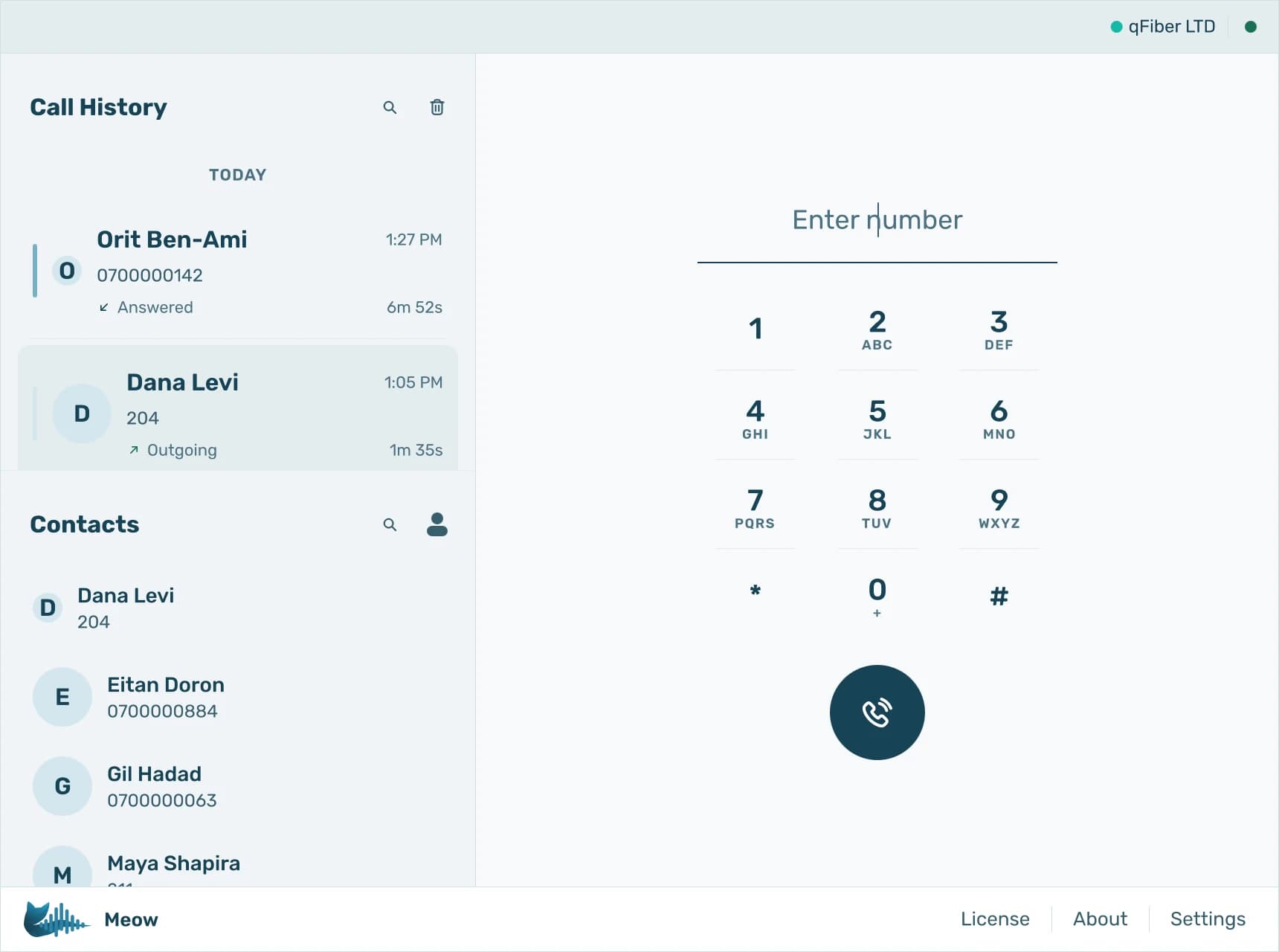
Built for whoever runs the phones
If the phone system is your responsibility, these are the four things you will be asked about. Each one has a page behind it.
You already run the PBX
Meow speaks standard SIP, so it connects to what you have: FreePBX, Asterisk, 3CX, FusionPBX, Kamailio, OpenSIPS, on your own hardware or hosted. UDP, TCP and TLS transports, and nothing proprietary in the middle.
How it connectsYou have to put it on every desk
Packages for Debian, Ubuntu, Mint, Fedora and Windows, plus an AppImage that needs no installation at all. Each one is self-contained, so there is no Qt version on the machine for it to argue with, and the Windows installer takes a silent switch.
Deployment guideYour people are on calls all day
Two SIP lines at once and several numbers behind one account. Hold one call and take another, swap between them, merge them into a conference, transfer, and record when you need a record of what was agreed.
What it can doYou answer for where the data goes
Calls run directly between your machines and your PBX. We operate no relay, so no conversation of yours passes through our systems. Contacts, history and recordings stay on each machine, and SIP credentials are encrypted there.
Security detailsBuilt for professionals
Everything you need for business communications, nothing you don't.
Two lines, several numbers
Register two SIP accounts at once and see the status of each. Providers that put several numbers behind one account are supported too: every number registers separately, so any of them can take a call, and you choose which one places an outgoing one.
Works with the PBX you already have
Standards-compliant SIP through PJSIP, over UDP, TCP or TLS. FreePBX, Asterisk, 3CX, FusionPBX, Kamailio, OpenSIPS, self-hosted or cloud. Nothing proprietary in the middle and nothing to migrate.
Native, not a browser in a costume
C++20 and Qt 6, using about 50 MB of application memory. Real system tray, real desktop notifications, and audio devices that can be chosen separately for microphone, call audio and ringing.
Contacts and history, held locally
Contacts and call history live in a database on the machine, with number normalisation that matches an incoming call to the right person. Nothing syncs to us, because there is nowhere for it to sync to.
Everything your desk phone does
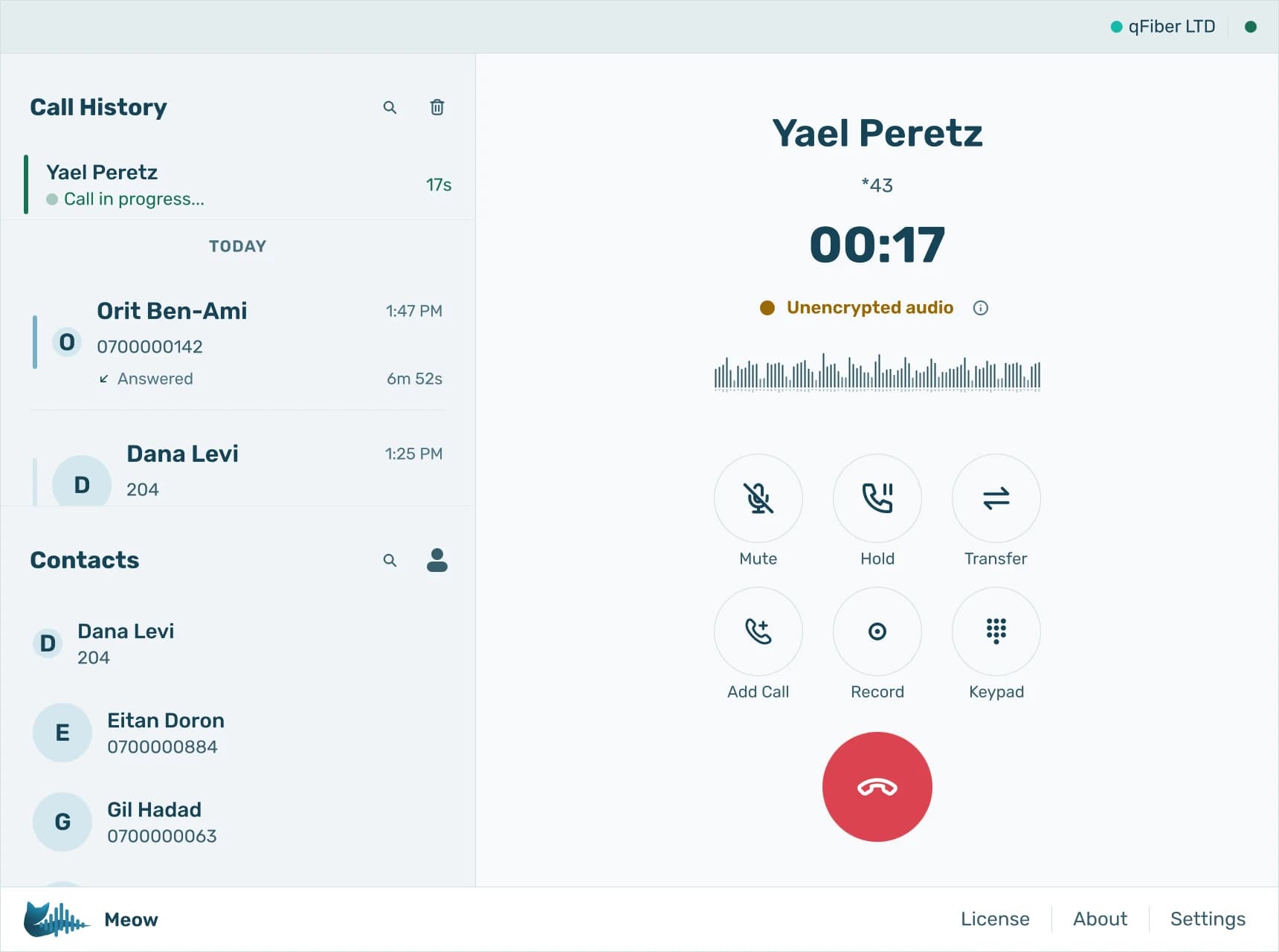
Meow is a full PBX endpoint, not a dialler. Every control your team relies on is one click away while the call is live.
- Hold one call and swap to another
- Blind transfer to any number or extension
- Three-way conference by merging two calls
- Call recording, saved to your own machine
- Two SIP lines, and several numbers behind one account
Calls surface, even when Meow is buried
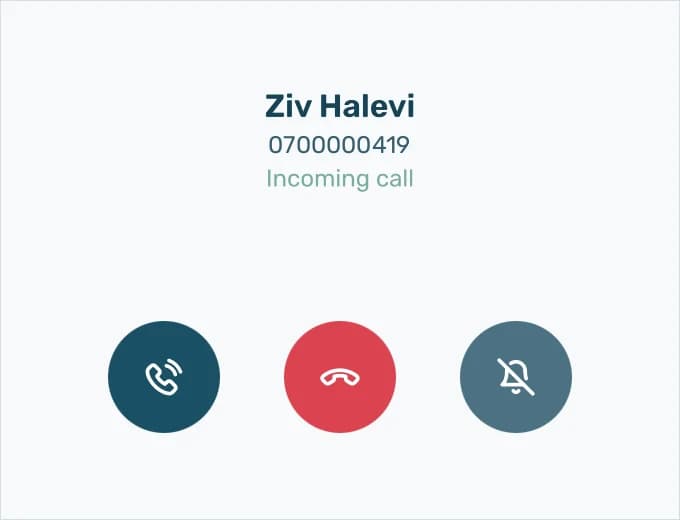
An incoming call opens its own window above whatever you are working on, with the caller matched against your contacts. Answer, decline, or silence it without hunting for the app.
On KDE, Hyprland and sway the window is held on top by the compositor itself, through the layer-shell protocol. GNOME's Wayland session does not allow that for any application, so there the window opens but can fall behind; Meow explains this on first run and points at the extension that restores it.
Configured once, by you
Everything is a local setting on the machine it applies to. There is no web console in the middle, and no account of ours holding your configuration.
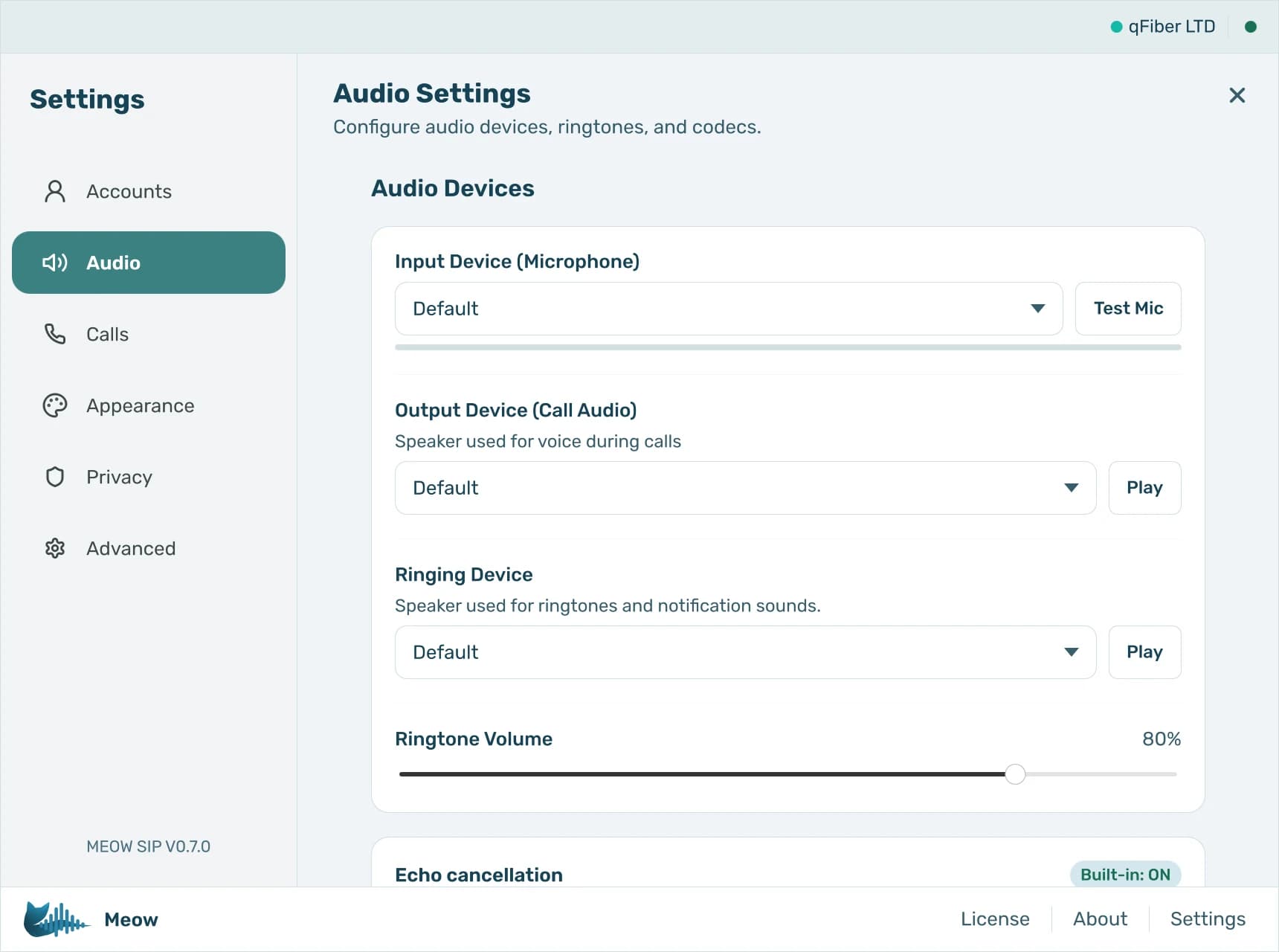
Audio
Pick the microphone, call output and ringing device separately. Test each before a call, not during one.
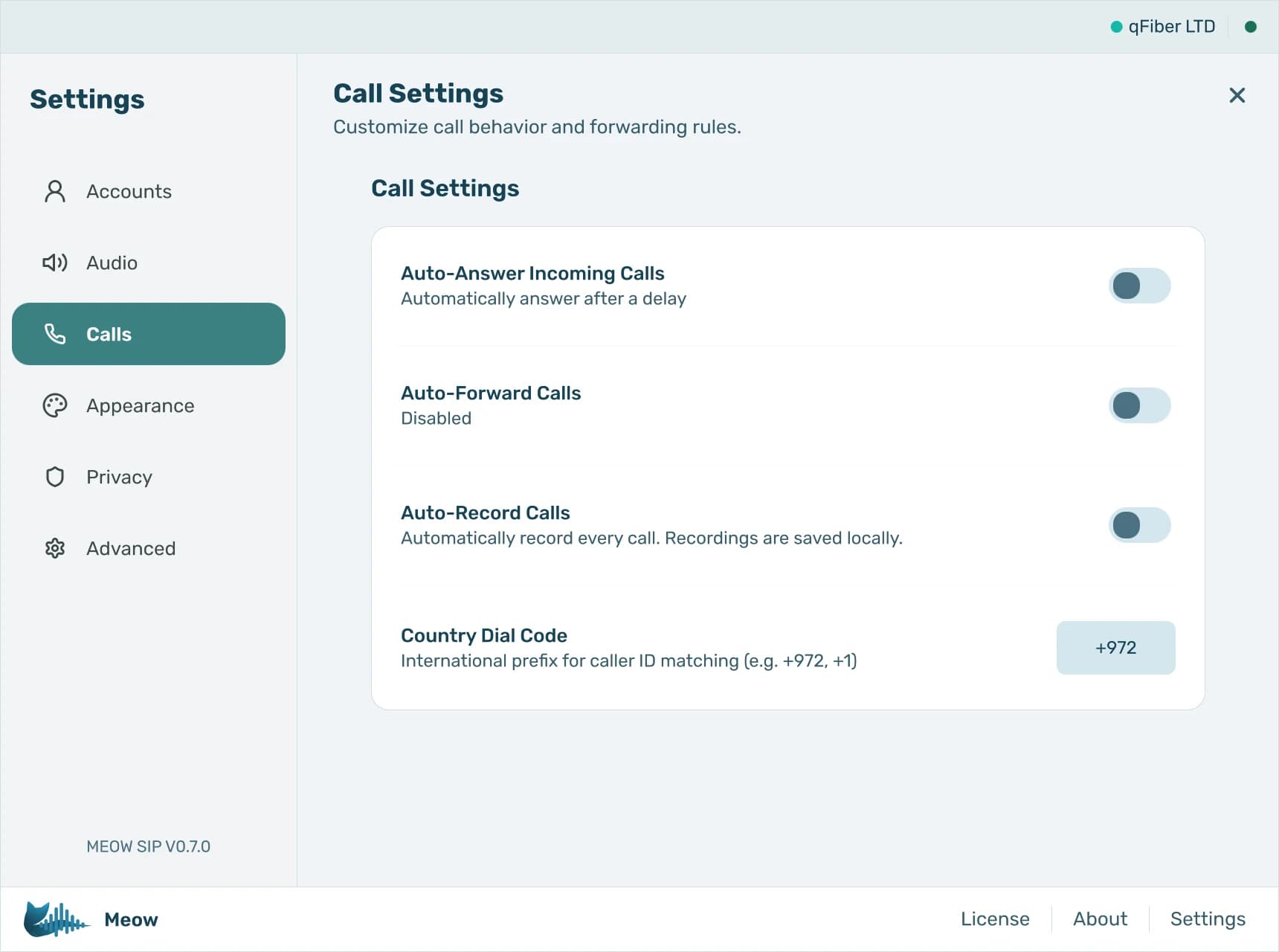
Calls
Auto-answer, call forwarding, automatic recording, and the dial code used to match caller ID to your contacts.
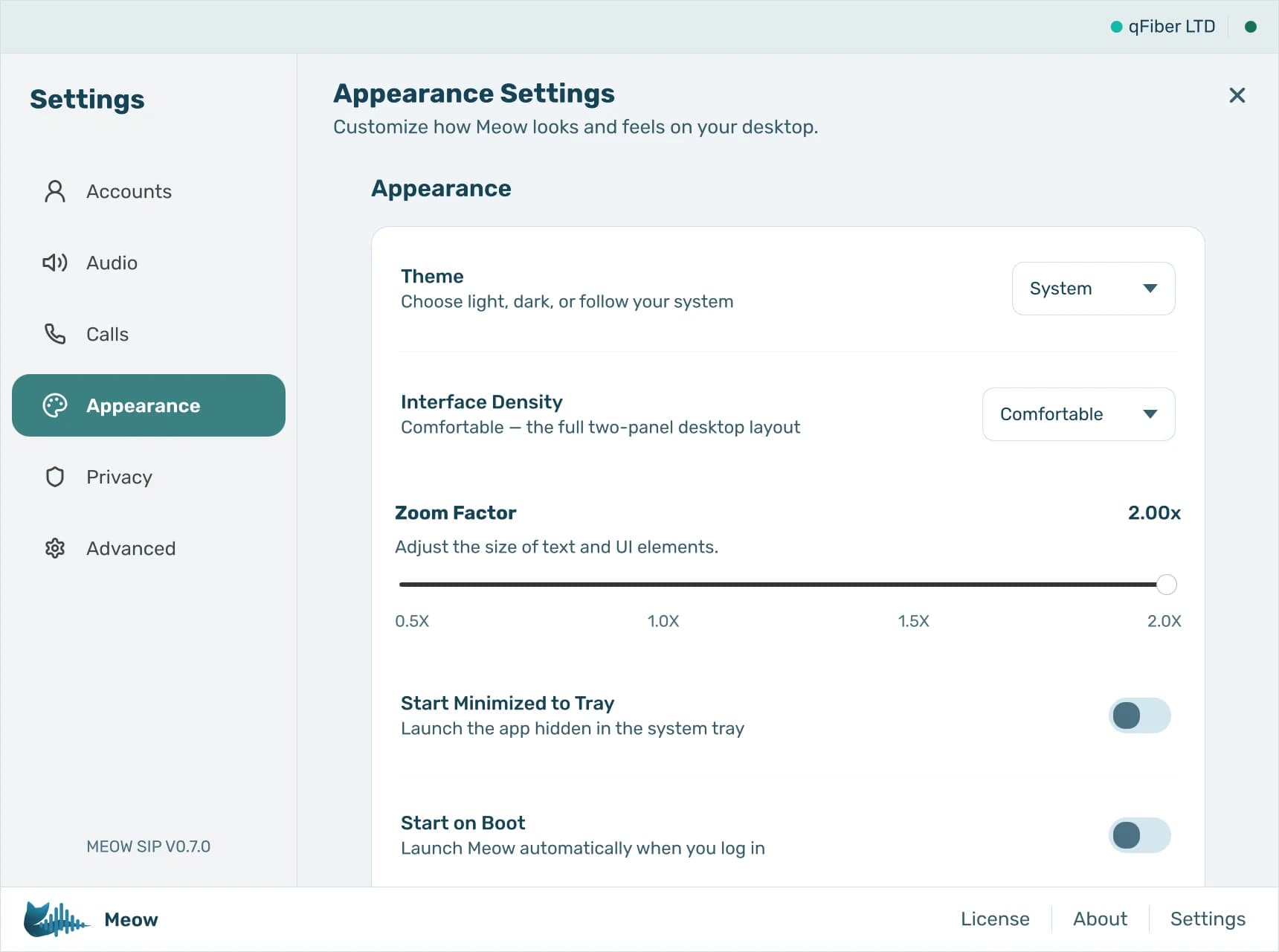
Appearance
Light, dark or follow the system. Interface density and a 0.5x–2x zoom, so it fits a laptop or a call-centre monitor.
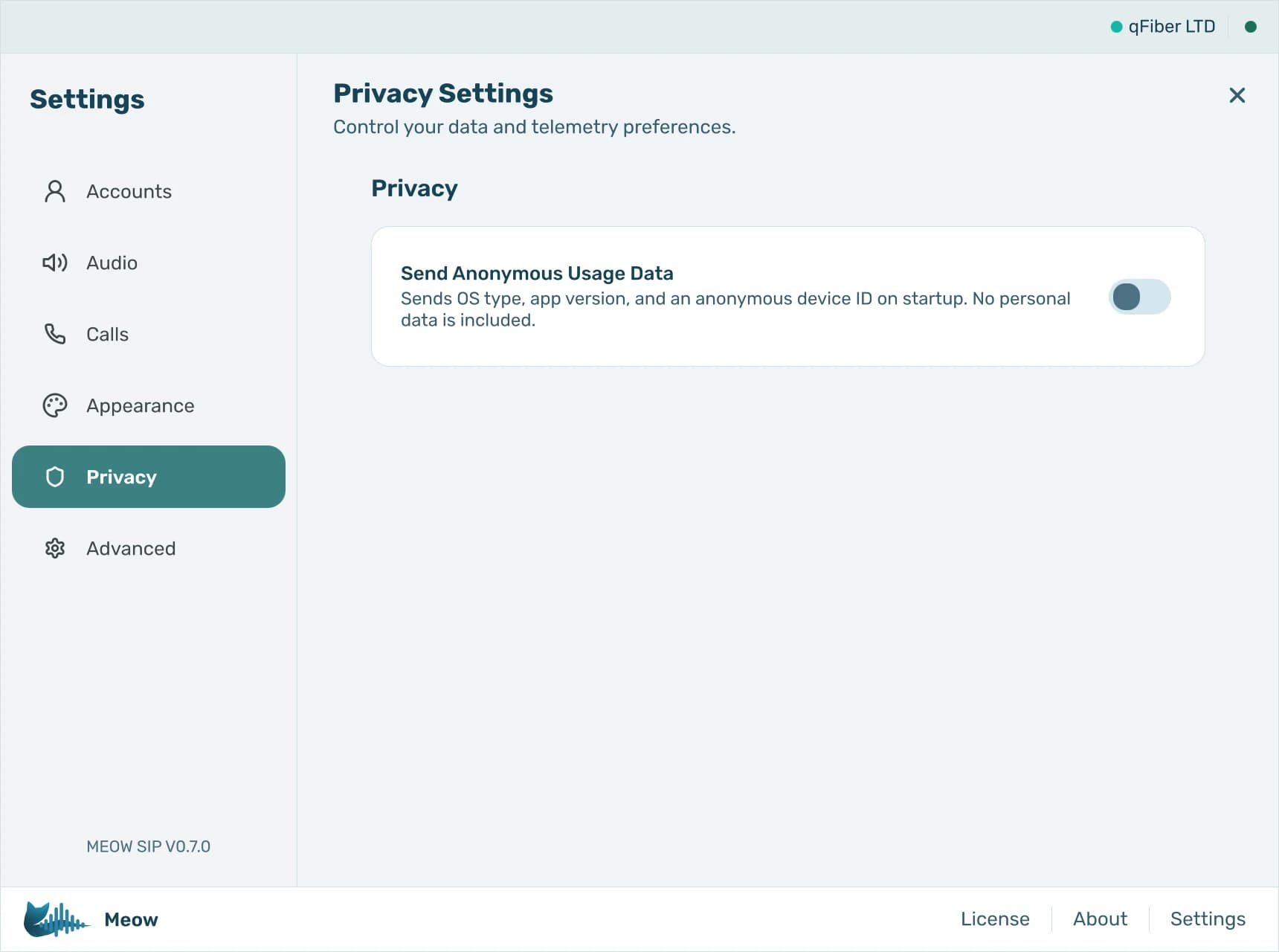
Privacy
One telemetry switch, and a first-run prompt that asks before anything is sent. No call content, no contacts, no personal data.
Why switch to Meow?
Most desktop softphones are bloated Electron apps or abandoned projects. Meow is built different.
| Meow | Typical alternatives | |
|---|---|---|
| Electron-based softphones | ~50 MB application memory | 300–800 MB RAM |
| Startup time | Under 1 second | 3–8 seconds |
| Audio engine | Native (WASAPI / PipeWire via libpulse) | WebRTC wrapper |
| Desktop integration | System tray, notifications, dark theme, hot-plug audio | Limited or none |
| Privacy | Calls go directly to your PBX. No data on our servers. | Often routes through vendor servers |
| PBX compatibility | Any SIP server (FreePBX, Asterisk, 3CX, etc.) | Often locked to vendor ecosystem |
Want a detailed breakdown? See the full comparison
Simple, transparent pricing
Start with a 14-day free trial, no credit card required. One licence per machine, no per-minute charges, and nothing tying you to a particular PBX or carrier.
Personal
For individuals and freelancers
- 1 device
- All SIP features
- Call history & contacts
- 14-day free trial
Professional
For teams and small businesses
- Up to 3 devices
- Everything in Personal
- Priority support
Enterprise
For organizations with custom needs
- Unlimited devices
- Everything in Professional
- Dedicated support
- Custom integrations
Not ready to commit? No problem. Meow is completely free for 14 days, no credit card needed. Just download and start calling.
Frequently asked questions
Quick answers to the most common questions about Meow.